
01
Design Over Trends
Trends arrive fully formed and leave before anyone learns to love them. We design for the wardrobe, not the feed.
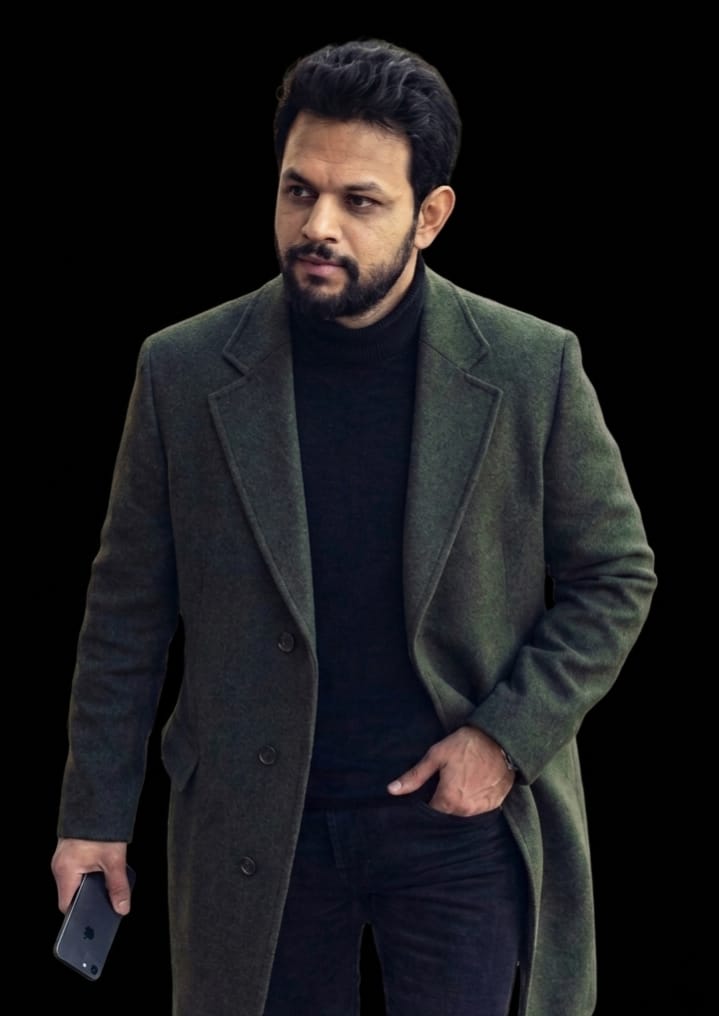
Meet the Founder
Founder & Chief Executive Officer
A house is not built by announcing one. It is built by deciding, early and permanently, what you will not do.
A Letter From The Founder
I did not begin ODCORRECT because the world needed another fashion label. It plainly does not. I began it because I could no longer accept the bargain the industry now offers — that beautiful materials should be rushed into objects designed to be forgotten, and that we should all agree to call this progress.
Somewhere in the last two decades, luxury stopped meaning permanence and started meaning access. Houses that once measured their work in decades began measuring it in drops. The garment became a photograph of a garment. The shoe became a silhouette rather than a construction. And the customer, who is not naive, learned to expect less while paying more. I have watched this happen at close range, and I have never been able to accept it as the natural order of things.
Luxury should outlive trends because a trend is, by definition, a temporary agreement about taste. If an object is designed to satisfy a temporary agreement, it will be discarded when the agreement expires. That is not a flaw in the customer; it is a flaw written into the object at the design stage. The only honest response is to design for the opposite: for the version of the wearer who exists in ten years and no longer cares what was fashionable in the year they bought it.
This is why fewer products matter. Every additional style is a distraction of attention, of material, of the hours of the very few people who can finish a thing properly. When a house makes hundreds of pieces a season, no one in that house can possibly know all of them. When it makes a handful, every one of them can be defended in detail by the person who made it. I would rather be responsible for ten objects I can describe seam by seam than a thousand I can only describe as a collection.
Craftsmanship is the mechanism by which that intention becomes real. It is not romance and it is not heritage marketing — it is a set of expensive, inconvenient decisions. Full canvas rather than fused, because the jacket should learn the shape of the person wearing it. Welted rather than cemented, because a shoe worth buying is a shoe worth repairing. Vegetable tanning that takes months rather than chemistry that takes days. Each of these choices costs money and time and gains nothing that photographs well. They are the entire point.
Details matter for the same reason. The lining nobody sees, the interior seam finished as carefully as the exterior, the weight and balance of a flacon in the hand, the way a button sits when the coat is open rather than closed. These are the parts of an object where standards are revealed, precisely because there is no incentive to get them right. A house is not judged by what it shows you. It is judged by what it does when it has the opportunity to cut a corner and does not.
I want fashion to become timeless again — not nostalgic, not conservative, simply built to survive. Modern in proportion and material, but indifferent to the calendar. Something a person buys once, wears for years, has repaired without embarrassment, and eventually passes on rather than disposes of. That was ordinary a century ago. It has become radical, which tells you how far the standard has fallen.
And so ODCORRECT is being built as a house, not a clothing brand. A brand is a name applied to products. A house is a set of standards that products must earn their way into — clothing first, then footwear, then fragrance, each held to the same discipline, each released only when it is ready. It will be slower to build. It will be smaller for longer. It is also the only version of this worth my life's work.
There is no collection yet. There is a standard, a great deal of unfinished work, and a promise that nothing will carry this name until it can be defended completely. If you are reading this, you are here before anything exists — which is the rarest place to stand, and the one I am most grateful for.
— Mrinal Gahlaut
Founder
ODCORRECT
The Path
I
A single conviction, written down before anything was made: that luxury had become loud, fast and disposable, and that a house could be built on the exact opposite of those three things.
II
Standards before products. The materials we would accept, the constructions we would use, the finishes we would insist on, and the compromises we would refuse — all agreed in writing before a single pattern was cut.
III
Clothing first. Structured outerwear and considered tailoring, released in small quantity, drafted once and corrected slowly until the proportion is inevitable.
IV
Leathers tanned over months and lasts refined until the line is correct. Welted, resolable, built to record a life rather than a season.
V
Compositions built from a small number of exceptional raw materials, given the time to settle. Weighted glass, restrained architecture, a trail meant for those standing close.
VI
Three disciplines held to one standard, presented in a handful of places, to people who recognise the difference. Not scale for its own sake — permanence.
Philosophy
A piece should look correct the year it is made and the decade after. We design against the calendar, not with it, and we accept that this makes the work slower and the audience smaller.
Craft is not a marketing word for us; it is a cost. Full canvas rather than fused. Welted rather than cemented. Edges closed by hand at the pace the hand requires.
Nothing is released to meet a date. We will wait three months for the right material rather than accept one that happens to be available, and we will delay a launch rather than ship an approximation.
Luxury is not price, and it is certainly not a logo. It is the accumulated evidence of decisions made carefully when nobody was watching.
Ornament is easy; proportion is difficult. We remove until only what is necessary remains, and then we spend most of our time refining what is left.
Not perfection as vanity — perfection as obligation. If a detail cannot be defended, it does not survive the review, however expensive that decision becomes.
Every object must answer why it deserves to exist before it is allowed to. Most ideas do not survive that question, which is precisely the point.
The world already owns more clothing than it can wear. Our ambition is the harder one: make fewer things, and make each of them worth keeping.
Personal Values
01
Trends arrive fully formed and leave before anyone learns to love them. We design for the wardrobe, not the feed.
02
Fewer products, each one able to justify its existence. Volume is the easiest thing in fashion to achieve and the least worth achieving.
03
The hand sets the pace. Where a process can only be done properly slowly, it will be done slowly.
04
Nothing added to be noticed. Confidence is quiet, and so is everything we intend to make.
05
We are building for decades, not quarters. Every decision is judged by how it will read in twenty years.
“We are not here to create more fashion.
We are here to create fewer things worth remembering.”