
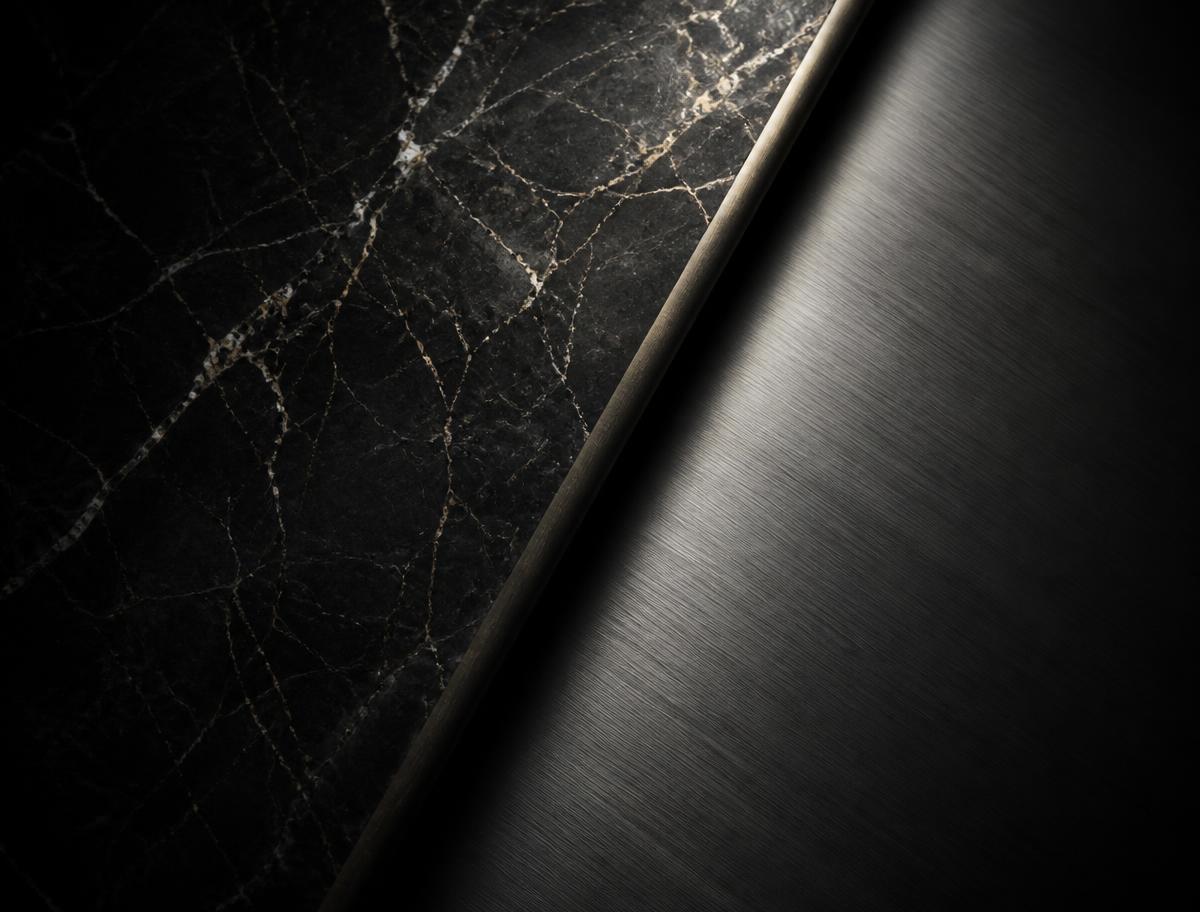
Marble, leather, brushed metal, dark wood, wool spun in mills that have not changed their rhythm in a century. Material honesty is the first promise a house makes.
Every house makes its first promise through material. Before a logo means anything, before a silhouette is recognised, the cloth in someone's hand has already told them what kind of company they are dealing with. Material is the part of luxury that cannot be styled, photographed, or argued into being.
We look for materials that are honest about what they are. Wool that behaves like wool — warm, slightly wilful, improving as it relaxes into a body. Leather that takes a patina rather than resisting it. Metal that is finished rather than plated over a compromise. Wood and stone that carry the irregularities of their origin instead of being sanded into anonymity.
Honesty rules out a great deal. It rules out coatings that imitate age, blends that borrow the name of a fibre while diluting its behaviour, and finishes designed to look expensive for exactly as long as a product remains on a shelf. These shortcuts are not cheaper in any meaningful sense; they simply move the cost from the maker to the owner.
The mills and tanneries capable of this work are not numerous, and they are rarely fast. Many of them have kept the same rhythm for a century, not out of nostalgia, but because the process has already been optimised as far as it can go without losing the thing that makes it worth doing. Working with them means accepting their calendar rather than imposing ours.
There is also a quieter argument for material honesty: it ages well in public. A synthetic finish looks its best in the first photograph and declines from there. A genuine one looks better in year five than it did in the studio. Over a long enough horizon, the honest material is the only one that flatters the house that chose it.
So the question we ask of every candidate material is not whether it is impressive, but whether it will still be defensible in a decade — on a body, in daylight, after use. Very few pass. Those that do become the foundation everything else is built on.